
Dhyana
The benefits of Dhyana when your personal life is in order
Patanjali placed the ethical observances first for a reason. Why a settled life is a precondition for meditative absorption rather than its reward and what a steady relationship contributes.
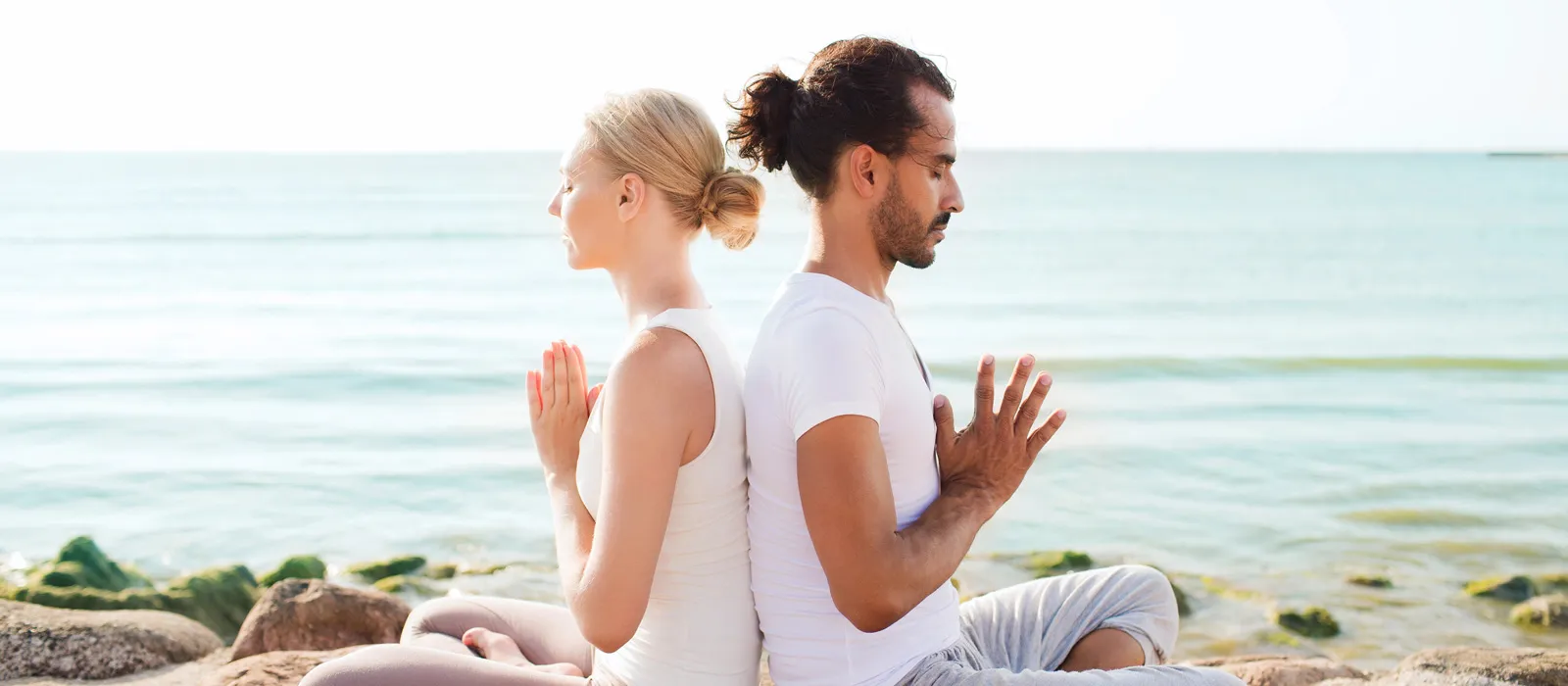
Dhyana, sustained meditative absorption, is the seventh limb of the eight limbed path, sitting between Dharana (focused concentration) and Samadhi. The ordering is not decorative. The limbs are sequential for a reason, and Dhyana is described as arriving rather than being performed. You do not do Dhyana. You prepare the conditions, and it happens.
Which raises an unfashionable question, what are those conditions? Modern meditation culture often suggests the practice is a refuge from a difficult life. Something you reach for when everything is falling apart. The classical texts suggest something closer to the opposite.
Why the yamas and niyamas come first
Patanjali places the ethical observances at the very beginning of the path. Satya (truthfulness), Ahimsa (non-harm), Asteya (non-stealing), Brahmacharya (right use of energy), Aparigraha (non-grasping) these come before posture, before breath, and long before meditation.
The reason is practical rather than moralistic. If you are lying to someone, avoiding a conversation you know you need to have, or living at odds with what you actually value, then sitting quietly with your own mind will produce exactly that content. The unresolved thing will be waiting, and it will be loud.
A settled life is not the reward for meditation. It is one of its preconditions.
What changes when your personal life is in order
Practitioners in stable circumstances tend to report the same shifts.
- The settling phase gets shorter. Instead of twenty minutes spent processing yesterday's argument, the mind quietens in five.
- Sessions get longer without effort. Duration stops being a discipline problem when sitting is not unpleasant.
- Consistency becomes easy. Daily practice is far more achievable when your days are not chaotic.
- Absorption actually occurs. Dharana can be forced through concentration. Dhyana cannot — it requires the mind to stop guarding something.
The role a good relationship plays
For most adults, the single largest variable in whether personal life is settled or turbulent is their closest relationship. An unhappy partnership is not one stressor among many, it is a background condition that colors everything, including the twenty minutes you spend on a cushion.
A steady relationship contributes to practice in ways that are quite concrete. It reduces the volume of unfinished emotional business. It provides physical safety and rest, which meditation depends on more than most people admit. It supplies practical time. A partner who understands why you disappear for half an hour in the morning is the difference between a daily practice and an occasional one. And a household that runs on shared values means the practice is not something you have to justify.
Conditions worth arranging first
- Adequate sleep. Meditation is not a substitute, and a tired mind cannot sustain absorption.
- One honest conversation you have been postponing. It will otherwise attend every session with you.
- A protected time and place, agreed with the people you live with.
- Enough physical practice to sit comfortably. Asana exists partly to make sitting possible.
The obvious objection
If meditation requires a settled life, is it useless to people in difficulty? Of course not and it would be irresponsible to suggest otherwise. Meditation practices genuinely help people through hard periods, and a large body of clinical work supports mindfulness based approaches for stress and low mood.
But it is worth being precise about what is happening. During difficulty, meditation functions mainly as regulation: steadying, creating a little space, reducing reactivity. That is valuable and it is not the same thing as Dhyana. Absorption is a different phenomenon, and it tends to appear when the system is not busy managing something urgent.
Knowing which one you are doing is useful. It stops people concluding they are bad at meditation when in fact they are simply meditating during a hard year.
Practising together
Couples who sit together often find it easier than sitting alone for straightforward reasons. The appointment is externally enforced, and stillness is contagious. Sit at right angles rather than face to face, agree the length in advance, use a timer rather than watching a clock, and resist the urge to compare notes afterwards. Meditation is not a shared experience even when it is a shared activity.
Putting the conditions in place
If your practice has felt stuck for a long time, it may not be a technique problem. It is worth asking honestly what in your life is unresolved and for many people, the honest answer involves not having found the right person yet.
That is a solvable problem. Yoga Date is where practitioners who take this seriously find each other. Read next on why yoga dating leads so reliably to a soulmate, or explore pranayama with someone you love and asana practice with someone special.
Continue your practice
Read next
Settle the life, and the practice follows
Meet conscious singles who understand why the half hour you spend on a cushion each morning is not negotiable.
Join FreeLocal Singles ◆ Free to join ◆ No obligation