
Pranayama
Why pranayama is more effective when you have someone you love
The breath lengthens when the body decides it is safe. On entrainment, partnered sequences, and using breathwork to repair a relationship rather than avoid a conversation.
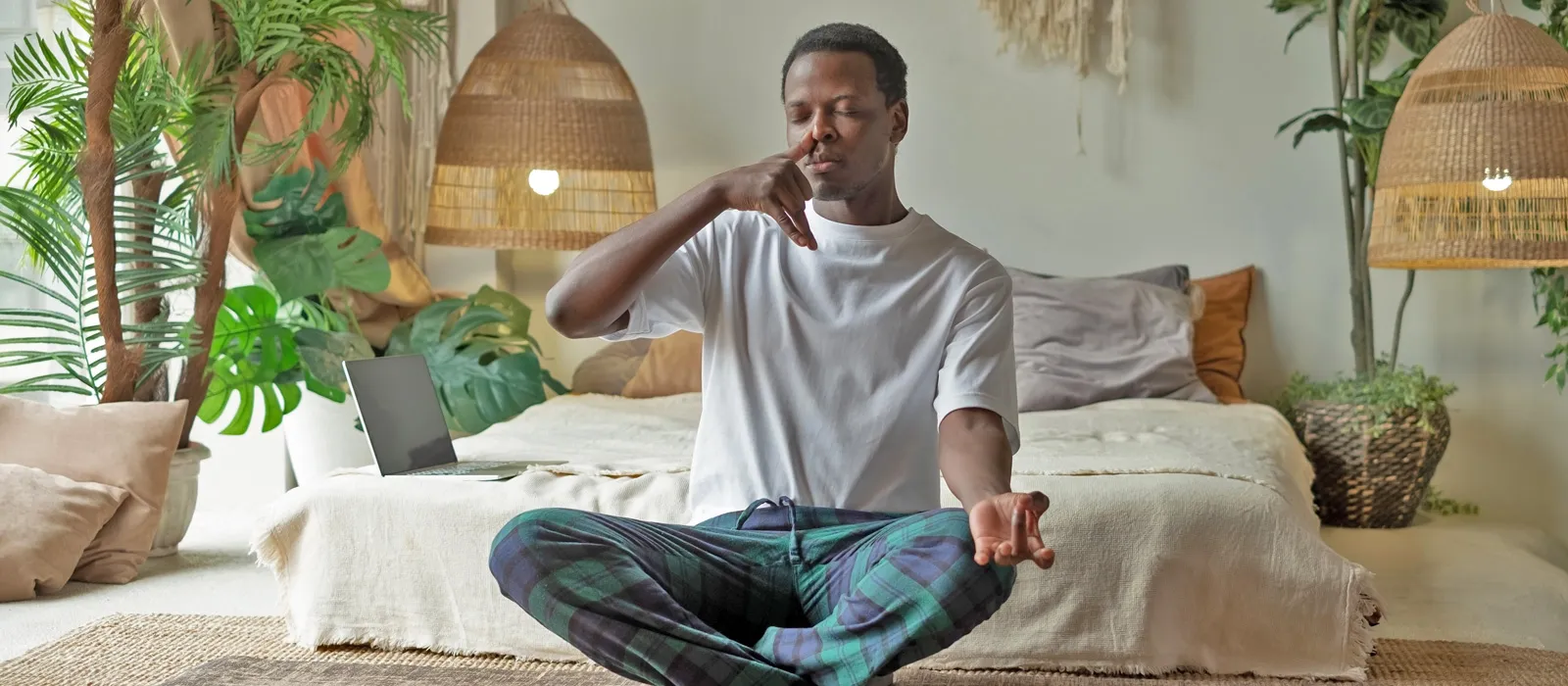
Pranayama, the regulation of breath, is the fourth limb of Patanjali's eight limbed path, and arguably the least glamorous. There is nothing to photograph. Nobody posts their Nadi Shodhana. Yet practitioners who stay with it consistently describe it as the practice that changed the most.
What fewer people talk about is how differently pranayama lands when you practise it beside someone you love. The breath is the most emotionally responsive system in the body, and emotional context is not a distraction from the practice. It is part of the instrument.
Why the breath responds to relationship
Breathing is unusual. It runs automatically, but you can take the controls whenever you like. That dual nature is precisely why it sits at the center of yoga. It is the doorway between the involuntary and the voluntary.
It is also profoundly responsive to how safe you feel. Anyone who has tried to lengthen an exhale during a stressful week knows the breath resists. Slow, deep, unhurried breathing is something the body permits when it is not braced for anything. A calm and trusted person nearby is one of the oldest signals of safety we have, and the breath registers it.
The breath lengthens when the body decides it is safe. Company is part of that decision.
Entrainment: breathing in time with someone
Sit close to someone and breathe slowly together for a few minutes and something noticeable happens: the rhythms drift into alignment. Musicians know this, singers know it, and anyone who has fallen asleep matching a partner's breathing knows it too.
For pranayama this is useful in a very practical way. Holding a 4-count inhale and an 8-count exhale is far easier when someone beside you is keeping the same rhythm. The count stops being an effort of will and becomes something the room is doing. Beginners in particular find that partnered practice extends their comfortable session length considerably.
Practices that work well in pairs
- Sama Vritti (equal breathing). The simplest starting point — equal counts in and out. Easy to synchronise, hard to get wrong.
- Dirga (three-part breath). Belly, ribs, chest. Practising back to back so you can feel each other's ribcage expand is genuinely instructive.
- Nadi Shodhana (alternate nostril). Best done side by side rather than synchronised — the rhythm is personal, but the shared stillness helps.
- Bhramari (bee breath). The humming exhale is self-conscious to do alone and delightful to do with someone. The vibration is audible to both of you.
- Extended exhale. Simply making the out-breath longer than the in-breath. The most reliably calming practice there is, and the easiest to hold when paced together.
A ten-minute partnered sequence
- Two minutes: sit comfortably, no technique, just notice the natural breath.
- Three minutes: Sama Vritti, four counts in and four out, matching each other.
- Three minutes: extend the exhale to six, then eight counts.
- Two minutes: release the count entirely and sit in whatever settles.
Pranayama as relationship repair
Here is where partnered breathwork earns its place beyond the mat. Most arguments between people who love each other are not really disagreements about the subject at hand, they are two dysregulated nervous systems failing to hear one another.
Couples who practise pranayama together have a shared tool for that moment. "Can we breathe for two minutes first" is a request that means something specific to both people, and unlike most de-escalation techniques it does not require either party to concede anything. You are not resolving the argument. You are getting the body back into a state where resolving it is possible.
It works because it is rehearsed. A technique you have practised on quiet mornings is available to you on a difficult evening. One you have only read about is not.
Practising honestly
Two cautions worth naming. First, pranayama is a real practice with real effects. Strong retention techniques such as Kumbhaka are best learned from a qualified teacher, and are generally not appropriate during pregnancy or with certain cardiovascular or respiratory conditions. Gentle equal breathing and extended exhales are safe for almost everyone. Start there.
Second, do not use the practice to bypass a conversation. Breathing together to reach a state where you can talk honestly is excellent. Breathing together instead of talking honestly is avoidance wearing a nicer outfit.
Finding your breathing partner
None of this works with someone who thinks the whole thing is faintly ridiculous. That is the honest obstacle, and it is why so many practitioners end up looking for a partner within the yoga community rather than outside it.
Yoga Date is built for exactly that search. Continue with how asana practice deepens with someone special, what Dhyana offers when your personal life is settled, or why yoga dating is such a strong route to a soulmate.
Continue your practice
Read next
Breathe with someone who understands
Yoga Date is where practitioners find partners who take the practice as seriously as they do. All eight limbs of it.
Join FreeFree to join ◆ No credit card needed